
Does the FEV1/SVC ratio over-diagnose airway obstruction?
A low FEV1/VC ratio is the primary indication for airway obstruction. The ATS/ERS statement on interpretation says “The VC, FEV1, FEV1/VC ratio and TLC are the basic parameters used to…
A low FEV1/VC ratio is the primary indication for airway obstruction. The ATS/ERS statement on interpretation says “The VC, FEV1,…
17 Jul 2016 July 17, 2016 • Leave a comment
When flow-volume loops get kinky
One of the more recognizable flow-volume loop contours is the one associated with severe airway obstruction. Specifically, this type of loop shows an abrupt decrease in flow rate following the…
One of the more recognizable flow-volume loop contours is the one associated with severe airway obstruction. Specifically, this type of…
10 Jul 2016 July 10, 2016 • Leave a comment
What’s a normal Flow-volume Loop?
Dozens of articles have been written about the correlation between different abnormal flow-volume loop contours and pulmonary disorders. In contrast very little has ever been written about what con…
Dozens of articles have been written about the correlation between different abnormal flow-volume loop contours and pulmonary disorders. In contrast…
4 Jul 2016 July 4, 2016 • Leave a comment
Selecting the best FEV1. What role should PEF play?
Recently my lab has had some turnover with a couple of older staff leaving and new staff coming on board. While reviewing reports I’ve found a number of instances where…
Recently my lab has had some turnover with a couple of older staff leaving and new staff coming on board.…
26 Jun 2016 June 26, 2016 • Leave a comment
A change that probably isn’t a change
Recently a report came across my desk from a patient being seen in the Tracheomalacia Clinic. The clinic is jointly operated by Cardio-Thoracic Surgery and Interventional Pulmonology and among othe…
Recently a report came across my desk from a patient being seen in the Tracheomalacia Clinic. The clinic is jointly…
19 Jun 2016 June 19, 2016 • Leave a comment
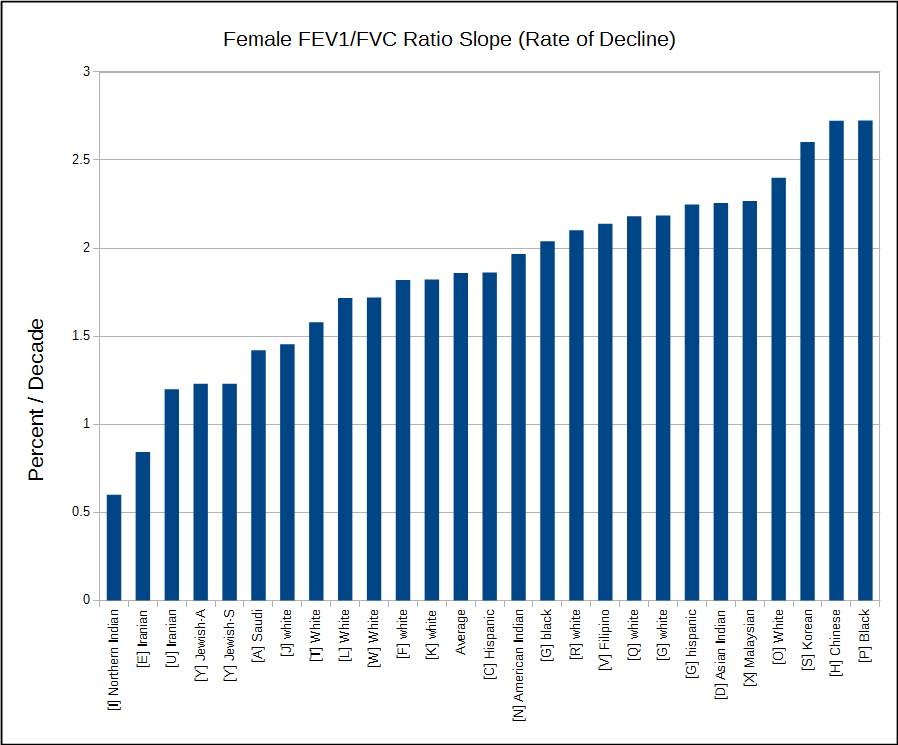
COPD and the FEV1/FVC ratio. GOLD or LLN?
Everyone uses the FEV1/FVC ratio as the primary factor in determining the presence or absence of airway obstruction but there are differences of opinion about what value of FEV1/FVC should…
Everyone uses the FEV1/FVC ratio as the primary factor in determining the presence or absence of airway obstruction but there…
12 Jun 2016 June 12, 2016 • Leave a comment
A glitch in time
This relatively odd DLCO testing error came across my desk today. Although it’s fairly unusual it brings up some interesting points about how the Breath-Holding Time (BHT) is determined and…
This relatively odd DLCO testing error came across my desk today. Although it’s fairly unusual it brings up some interesting…
6 Jun 2016 June 6, 2016 • Leave a comment
Re-branding, re-imagining and re-defining ourselves
This idea originates, as far as I know, from Michael Sims, president and CEO of NspireHealth. I got it second hand and suspect that it is a small part of…
This idea originates, as far as I know, from Michael Sims, president and CEO of NspireHealth. I got it second…
29 May 2016 May 29, 2016 • Leave a comment
Exercise and the IC, EELV and Vt/IC ratio
Determining whether a subject has a ventilatory limitation to exercise used to be fairly simple since it was based solely on the maximum minute ventilation (Ve) as a percent of…
Determining whether a subject has a ventilatory limitation to exercise used to be fairly simple since it was based solely…
22 May 2016 May 22, 2016 • Leave a comment