What’s normal about MIP and MEP?
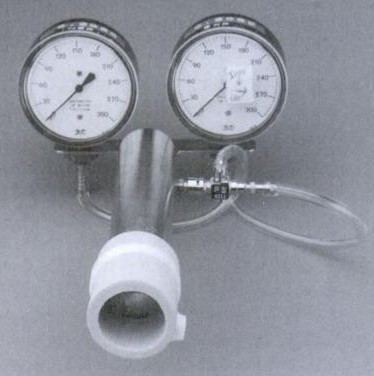
The static respiratory pressures, Maximal Inspiratory Pressure (MIP or PIMAX) and Maximal Expiratory Pressure (MEP or PEMAX) are a way to non-invasively assess respiratory muscle strength. Respirat…
The static respiratory pressures, Maximal Inspiratory Pressure (MIP or PIMAX) and Maximal Expiratory Pressure (MEP or PEMAX) are a way…
26 Apr 2015 April 26, 2015 • Leave a comment
The VA/TLC ratio
I was reading James Hansen’s textbook on pulmonary function testing (one of my more interesting reads lately) and in passing he mentioned using the VA/TLC ratio as a way to…
I was reading James Hansen’s textbook on pulmonary function testing (one of my more interesting reads lately) and in passing…
19 Apr 2015 April 19, 2015 • Leave a comment
Vocal cord dysfunction
Recently I reviewed a set of completely irreproducible spirometry results. The patient had made eight attempts and the FVC, FEV1 and Peak Flow were different every time. In particular, there…
Recently I reviewed a set of completely irreproducible spirometry results. The patient had made eight attempts and the FVC, FEV1…
12 Apr 2015 April 12, 2015 • Leave a comment
Tidal flow-volume loops
I was reviewing a spirometry report and noticed something odd about the flow-volume loop, or more specifically the tidal loop, and this got me to thinking about what tidal loops…
I was reviewing a spirometry report and noticed something odd about the flow-volume loop, or more specifically the tidal loop,…
8 Apr 2015 April 8, 2015 • Leave a comment
Washout volume, transit time and DLCO
Recently while reviewing PFT reports I ran across a test from a patient who had been having spirometry, lung volume and DLCO tests performed at regular intervals for the last…
Recently while reviewing PFT reports I ran across a test from a patient who had been having spirometry, lung volume…
29 Mar 2015 March 29, 2015 • Leave a comment
Diagnosing Mitochondrial Myopathies
I’ve been reviewing my CPET textbooks trying to get a better idea of how to differentiate between different cardiovascular limitations. The other day I ran across an article on a…
I’ve been reviewing my CPET textbooks trying to get a better idea of how to differentiate between different cardiovascular limitations.…
22 Mar 2015 March 22, 2015 • Leave a comment
The effects of Obesity on lung function
Obesity has become far more commonplace than it was a generation ago. The reasons for this are unclear and have been attributed at one time or another to hormone-mimicking chemicals…
Obesity has become far more commonplace than it was a generation ago. The reasons for this are unclear and have…
15 Mar 2015 March 15, 2015 • Leave a comment
When TLC, RV and VC don’t add up
I thought I was done with lung volume issues for at least a little while but a short time ago I was reviewing a report from another PFT lab and…
I thought I was done with lung volume issues for at least a little while but a short time ago…
8 Mar 2015 March 8, 2015 • Leave a comment
The NHANESIII FEV1/FVC ratio and height, revisited
I was reading James Hansen’s textbook on pulmonary function testing and ran across a spot where he made a minor criticism of the NHANESIII (Hankinson et al) reference equations for…
I was reading James Hansen’s textbook on pulmonary function testing and ran across a spot where he made a minor…
28 Feb 2015 February 28, 2015 • Leave a comment