
What’s wrong with an elevated DLCO?
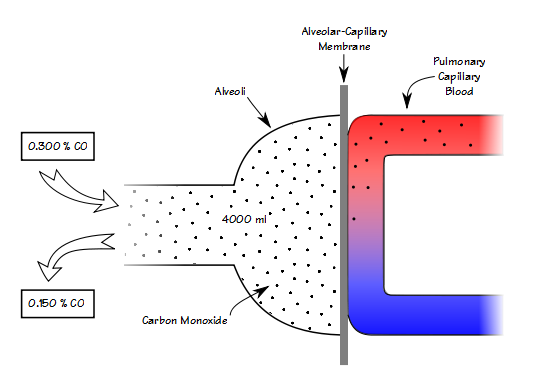
Well, not necessarily anything, although as usual that depends on the circumstances. Recently I was contacted by an individual who was concerned that their DLCO had decreased from 120% of predicted…
Well, not necessarily anything, although as usual that depends on the circumstances. Recently I was contacted by an individual who was concerned that their DLCO had decreased from 120% of predicted…
I’ve been thinking about quality control and quality improvement lately. Mostly this has been about how to go about determining whether the lab has a quality problem with testing and what statistic…
The Lung Clearance Index (LCI) is a relatively simple test that provides a measure of ventilation inhomogeneity within the lung. This can be clinically useful information since several studies have…
A month or two ago in the AARC Diagnostics forum several members noted that their labs had acquired Impulse Oscillometry systems a number of years ago but that their physicians had since stopped or…
A couple of days ago I was reviewing (triaging, actually) the spirometry portion of a full panel of PFTs performed with pretty terrible test quality and was trying to decide if the technician respo…
A friend recently sent me the links to several YouTube videos on pulmonary function testing. I’ve spent some time off and on over the last year looking at YouTube videos and in particular I’ve been…
The use of Z scores to report PFT results, both clinically and for research is occurring more and more frequently. Both the Z score and the Lower Limit of Normal (LLN) come from the same roots and …
A couple weeks ago I was asked whether it was safe for a patient with an abdominal aortic aneurysm (AAA) to have pulmonary function testing. My first thought was that it was probably unsafe but aft…
The 2005 ATS/ERS standards for assessing post-bronchodilator changes in FVC and FEV1 have been criticized numerous times. A recent article in the May issue of Chest (Quanjer et al) has taken it to …